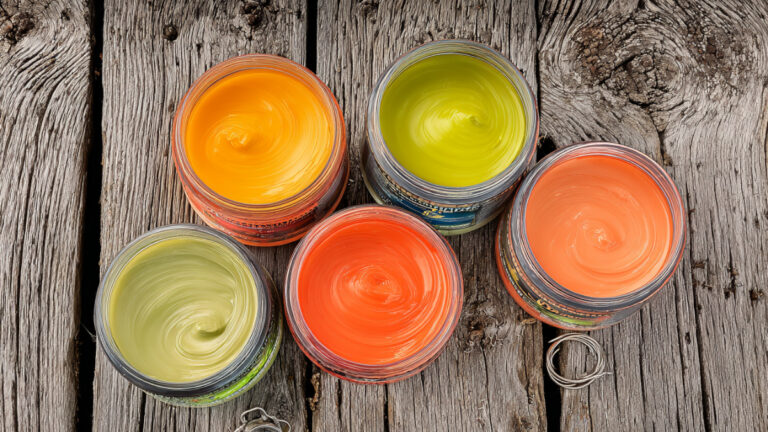
I’ve lost count of how many times I’ve stood in the Powerbait aisle wondering which jar to grab. There are dozens of colors, new formulas keep appearing, and everyone online seems to have a different opinion.
Here’s what I’ve actually worked out after years of chasing planted trout in PNW lakes: color matters, but it’s not magic. The right color for the conditions will get you more bites. The wrong one won’t shut you out. And there’s a simple logic to matching color to water that makes the whole thing a lot less of a guessing game.
Why Color Actually Matters (And Why It Doesn't Matter as Much as You Think)
Trout find Powerbait primarily by scent — that’s what Berkley spent 30 years engineering into the formula. By the time a trout is close enough to see your bait, it’s already interested. So color is more about getting a fish’s attention from a distance and triggering that final commitment to bite.
In clear water, trout can see your bait from further away — and they can tell it looks a little unnatural. Subtle colors are less likely to spook them. In murky water, fish are navigating more by scent and lateral line, and a bright color gives them a visible target to zero in on once they’re close.
That’s the whole logic. Everything below is just applying that principle to specific conditions.
Best Powerbait Colors by Condition
Use this as your field guide. These are the colors I actually keep in my bag and when I reach for each one.
| Color | Best conditions | Get it |
|---|---|---|
| Chartreuse | Murky or stained water, overcast days, early spring right after stocking | Berkley PowerBait Trout Bait – Chartreuse |
| Fluorescent Orange | Stained water, low light, early morning | Berkley PowerBait Trout Bait – Fluorescent Orange |
| Rainbow | All-conditions producer, especially good in sunlight when the glitter catches light | Berkley PowerBait Trout Bait – Rainbow |
| Fluorescent Yellow | Murky water, especially effective mid-morning as light penetrates | Berkley PowerBait Trout Bait – Fluorescent Yellow |
| Salmon Peach | Clear to lightly stained water, spring and early season freshly stocked fish | Berkley Glitter Turbo Dough – Salmon Peach |
| Spring Green | Clear water, bright days, mid-summer | Berkley Glitter Turbo Dough – Spring Green |
| Corn / Tequila Fire | Clear water, calm days — mimics natural food color well, strong garlic scent variant is a sleeper pick | Berkley Glitter Turbo Dough – Corn Tequila Fire |
TIP: Don’t assume the color that’s always sold out is the best one. Some colors just sell faster because of packaging. Bring 3–4 jars and rotate every 30 minutes if you’re not getting bites.
If you want to start with the four most proven colors without overthinking it, Berkley’s 4-pack assortment covers Chartreuse, Rainbow, Fluorescent Orange, and Fluorescent Yellow — which is a solid all-conditions kit right there.
Glitter vs Standard: Does It Make a Difference?
Most colors come in a standard version and a glitter version. My honest take: glitter is worth it in sunny conditions or clear water. The micro-flakes catch light and create a subtle flash that can trigger curious fish. In low-light or murky conditions the difference is negligible.
Berkley also now offers the Glitter Chroma-Glow Dough which adds a glow element on top of the glitter — worth having for fishing later in the day or in deeper, darker water where fish are hunting more by glow than by color.
What About Turbo Dough?
The Turbo Dough line is Berkley’s higher-scent formula — same floating action, more aggressive scent dispersion. If you’re fishing in colder water where trout are sluggish and less likely to chase, the extra scent output can make a difference. I don’t always reach for it, but it’s earned its place in the rotation for cold early-season mornings.
The Glitter Turbo Dough combines the higher scent with the glitter finish and comes in colors like Salmon Peach, Spring Green, and Corn/Tequila Fire that aren’t available in the standard line — which is reason enough to keep a couple jars around.
A Note on Hook Size
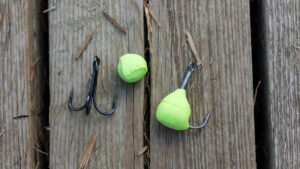
Hook size matters more than most people think with Powerbait. The goal is a hook small enough to hide completely inside the dough ball — if the hook is sticking out, the bait looks wrong and fish will reject it.
For floating dough, you also need a hook light enough that it doesn’t pull the bait down to the bottom. A size 14 or 16 treble hook works well if you’re keeping fish. If you’re practicing catch-and-release, a #8 single bait holder is easier to remove cleanly and still light enough to let the bait float the way it’s supposed to.
The right fishing line matters here too — a too-heavy leader will drag your bait down even with the right hook.
My Go-To Color Rotation
When I’m heading to a lake I haven’t fished before, here’s what’s in my bag:
- Chartreuse — first cast, almost always. If fish are around and biting, chartreuse will find them.
- Rainbow — my backup if chartreuse isn’t producing. Works in a wide range of conditions and the glitter earns its keep in sunlight.
- Fluorescent Orange — low light, early morning, or stained water. Underrated.
- Salmon Peach (Turbo Dough) — early spring, freshly stocked fish.
- Spring Green — clear water, bright sunny afternoons in summer.
TIP: Keep a small notebook in your tackle box. Write down what color worked, what the water looked like, and the weather. After a season you’ll have your own data — and it’ll be more useful than anything you read online, including this.
Where to Buy
Direct from Berkley is often the best way to get the full color range, especially for the Turbo Dough colors that don’t always show up on local tackle shop shelves:
The Bottom Line
Bright colors in dirty water, lighter colors in clear water. Glitter when the sun is out. Nuggets right after a stocking. That’s the whole playbook.
The most important thing isn’t picking the perfect color — it’s getting your bait in front of fish in the right location with the right rig. Color is the last 10%. Don’t overthink it, bring a few jars, and let the trout tell you what they want that day.