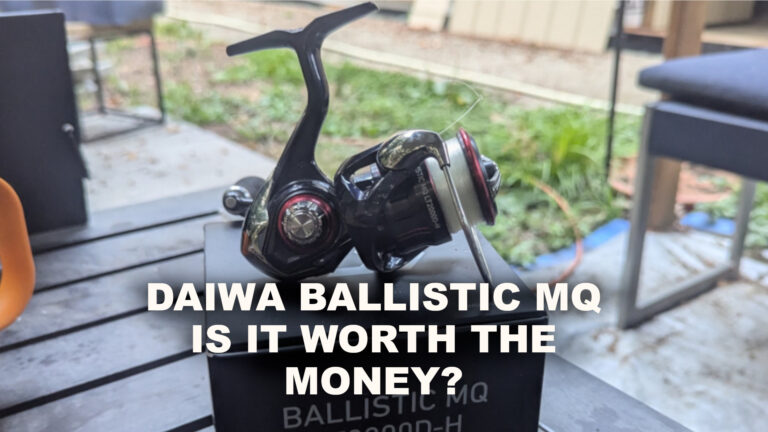
Spending $270 on a spinning reel is a real commitment — especially if most of your trout fishing involves stocked rainbows, a cooler full of Powerbait, and a lawn chair. The Daiwa Ballistic MQ LT 2000 picked up the 2025 ICAST Best Freshwater Reel award, and I was overdue for an upgrade from gear that had seen better days, so I picked one up specifically to run on rainbow trout in a western Montana mountain lake, mostly throwing light Berkley Dough Rider spinners.
Short answer: Yes, it’s worth it — with a couple of honest caveats. Long answer is everything below, including how it actually performed once I got it wet.
Check current price on Amazon →
Who Is This Reel For?
This isn’t a reel for the angler who fishes three times a summer and is happy with whatever’s on the shelf at the sporting goods store. It’s for the angler who’s put in enough hours on cheaper gear to know exactly what they’re tired of dealing with — gritty bails, mushy drags, reels that feel like they’re fighting you instead of the fish — and is ready to pay for something built to last.
It’s light-to-medium freshwater gear: trout, panfish, light bass. If you’re chasing anything that requires serious cranking power or you’re bottom-fishing gear-heavy rigs all day, look at something with a bigger drag ceiling. But for PNW lake trout on spinners or light bait rigs, this is squarely in its wheelhouse.
Specs That Matter for Trout Fishing
| Spec | Daiwa Ballistic MQ LT 2000D-H |
|---|---|
| Price | $269.99 MSRP |
| Weight | 6.0 oz |
| Gear ratio | 5.8:1 |
| Line per crank | 30.3 in |
| Max drag | 11 lb |
| Bearings | 9 total (2 CRBB + 6 BB + 1 RB) |
| Mono capacity | 6 lb / 220 yds |
| Braid capacity | 10 lb / 215 yds |
The 2000 is the sweet spot size for this kind of fishing. The 1000 is too small to comfortably balance a 7-foot rod and doesn’t hold enough line for anything beyond the shallowest water. The 2500 is genuinely overkill unless you’re also using the same reel for light bass or inshore work — more weight, more bulk, no real upside for stocked rainbow trout. The 2000D-H’s 11 lb max drag is far more than you’ll ever need fighting a trout, which just means you’ve got headroom to spare and nothing pushed to its limit.
Key Features Explained
MQ Monocoque Body / Zaion V — Daiwa ditched the traditional side plate in favor of a single-piece body. Practically, that means more rigidity, no screws working loose over a season, and better resistance to the cold, wet mornings that come standard with mountain lake trout fishing.
AIRDRIVE System — The rotor, bail, and spool are all engineered to cut weight and rotational resistance. This is the piece that translates most directly into casting distance, which matters a lot when you’re throwing 1/8 oz spinners and need every bit of momentum you can get.
MAGSEAL — A magnetic oil seal on the main shaft that keeps water, sand, and grit out of the internals. If you fish wet PNW mornings or drop gear on damp boat decks (who doesn’t), this is the feature quietly protecting your investment.
Tough DigiGear — Daiwa’s gears here are roughly 40% thicker than standard, engineered digitally for strength and smooth power transfer. It’s the difference between a reel that feels tight after year one and a reel that starts feeling loose and gritty.
ATD (Automatic Tournament Drag) — A drag system designed to start smooth from the very first pull, without the hesitation or surge that cheaper drags have. This matters more than people expect when you’re running light 4-6 lb line and can’t afford any jerkiness on a hookset.
First Impressions Out of the Box
Straight out of the box, this reel feels like a $270 reel — solid, tight, no plastic-y give anywhere. Coming from older, heavier gear, the weight difference was immediately noticeable in hand. The drag knob turns with real precision, not the vague half-clicks you get on budget reels, and the bail snapped shut with a crisp, confident action.
On the handle: mine had a tiny, but noticeable wobble at the shaft. I did some digging and this is the one complaint that people have about this reel, but it doesn’t seem to affect how smooth it is or how well it functions.
On the Water: Rainbow Trout With Spinners
I finally got this reel wet on a rainbow trout lake in western Montana, running Berkley Dough Rider spinners in 1/8 and 1/4 oz (white and firetiger) on a 7-foot rod — and it delivered on basically everything I was hoping for.
The fish: Landed a solid 1 lb rainbow along with a good mixed bag of perch and a few other species. Nothing that pushed the drag to its limits, but enough to get a real feel for how the reel handles a fighting fish.
Drag: Butter smooth. Even on the rainbow, there was no hesitation, no jerkiness, no surging — just steady, predictable resistance the whole fight. This is exactly what you want out of a drag system at this price point, and it didn’t disappoint.
Casting distance: This is where the reel actually surprised me. With light 1/8 oz spinners, I’m used to launch my casts and still have my lure fall well off the far shoreline. Not with this reel — I had to actively rein it in and be more careful, because it was shooting those light spinners out further than I expected. If you fish from the bank and want more reach out of light lures, this is a real, tangible upgrade.
Handle: As mentioned, there’s a small amount of wobble in the handle. It’s not enough to be concerning or to affect performance, but it’s there. The foam grip feels good in my hand and smooth on the retrieve.
Line Recommendations for the 2000
For stocked rainbow trout on spinners or light bait rigs, stick to 4-6 lb monofilament. It matches the reel’s line capacity, casts cleanly off the AIRDRIVE spool, and won’t fight you on light lures the way heavier line will.
If you want more sensitivity and zero stretch, a braid-to-fluorocarbon setup works well here too — something like 8 lb braid with a 4-6 lb fluorocarbon leader gives you the best of both, though it’s more setup than most casual trout trips call for.
I loaded up with some 4# Berkley Trilene XL. Soft, smooth casting and an all around good fishing line.
What to avoid: don’t load this reel up with 10+ lb mono thinking “more is better.” It kills casting distance with light lures, defeats the purpose of a finesse-oriented reel like this, and there’s no scenario in stocked trout fishing where you need that much line strength anyway.
Daiwa Ballistic MQ LT 2000 vs The Competition
At this price point, two reels come up over and over in “what should I buy” threads: Shimano’s Stradic FL and Daiwa’s own BG MQ. Here’s how the 2000D-H stacks up against both.
| Spec | Ballistic MQ LT 2000D-H | Stradic FL C2000S | BG MQ 2500D-H |
|---|---|---|---|
| Price | $269.99 | ~$190–220 | $249.99 |
| Weight | 6.0 oz | 6.5 oz | 8.3 oz |
| Gear ratio | 5.8:1 | 5.1:1 | 5.7:1 |
| Max drag | 11 lb | 7 lb | 22 lb |
| Bearings | 9 (incl. 2 CRBB) | 7 (6+1) | 7 (6+1) |
| Sealing | MAGSEAL | X-Protect coating | Rubber gasket seals |
| Built for | Trout, panfish, light finesse | Bass, light finesse | Trout/bass with headroom for bigger fish |
vs Shimano Stradic FL: The Stradic FL is the reel most people cross-shop this against, and it’s $50-80 cheaper. It’s a genuinely smooth reel — Shimano’s SilentDrive tech is real — but it’s also a lower gear ratio (5.1:1 vs 5.8:1) and less than half the max drag of the Ballistic. For trout on light spinners, the Stradic will get the job done fine. But it doesn’t have anything comparable to MAGSEAL, and anglers who’ve run both side by side consistently note the Ballistic’s drag and sealing edge it out despite being the pricier option. If budget is the deciding factor, the Stradic isn’t a bad landing spot. If you want the extra drag headroom and better long-term corrosion protection, that’s what the extra $50 buys you.
vs Daiwa BG MQ: This is the closer call, and it’s really a “what do you fish for” question more than a “which is better” one. The BG MQ 2500D-H is Daiwa’s own workhorse — it’s a full 2.3 oz heavier and built around a 22 lb drag, which is serious overkill for stocked trout but genuinely useful if you’re also running the same reel on bass or light inshore saltwater. The Ballistic MQ LT is the more purpose-built finesse reel: lighter in hand, better casting dynamics with light lures, and the 11 lb drag ceiling is plenty for anything swimming in a PNW mountain lake. If this reel is doing double duty across species and water types, the BG MQ’s extra muscle might be worth the added weight. If it’s staying dedicated to trout and panfish, the Ballistic is the better tool for that specific job — which tracks with what I found casting light Dough Rider spinners with it.
The bottom line on the comparison: Nobody in this price range is beating the Ballistic MQ LT on the combination of weight, casting performance, and sealing for a dedicated trout setup. The Stradic FL wins on price. The BG MQ wins if you need more drag muscle for bigger or tougher fish. But for the specific job — light spinners, stocked rainbows, PNW lakes — the Ballistic is doing exactly what it’s built to do.
What I Don’t Love
- $270 price point — not an impulse buy for a casual angler
- One-year warranty feels short for a reel in this price tier
- Slight handle wobble — minor and not something that affects casting or fighting a fish, but it’s a known quirk of this reel and mine isn’t immune to it
Final Verdict + CTA
After a full trip on the water, this reel earned its price tag. The drag held up smooth on a fighting rainbow, the casting distance with light spinners genuinely surprised me, and the build quality feels every bit as solid as it did out of the box. The handle wobble is real but minor — not a dealbreaker, just something to know going in.
It’s not the right purchase if you’re a casual angler who fishes a few times a year. But if you’re on the water regularly and want gear you won’t have to replace, this one earns its keep. I’m looking forward to running it for years to come.
Check current price on Amazon →
Frequently Asked Questions
Is the Daiwa Ballistic MQ LT good for trout fishing?
Yes. The 2000 size is well-matched to stocked rainbow trout, with plenty of drag in reserve (11 lb max), a smooth ATD drag system, and light enough weight (6 oz) to fish comfortably all day on a 7-foot rod.
What size Daiwa Ballistic MQ LT should I get for trout?
The 2000 is the right call for most trout fishing. The 1000 is too small to balance most rods well and holds limited line, while the 2500 adds unnecessary weight and bulk for fish that rarely test an 11 lb drag.
Daiwa Ballistic MQ LT vs Shimano Stradic — which is better?
For dedicated trout fishing, the Ballistic MQ LT edges it out on drag capacity (11 lb vs 7 lb) and sealing (MAGSEAL vs X-Protect coating), though the Stradic FL is $50-80 cheaper. If budget is the priority, the Stradic is a solid option; if you want more headroom and sealing, the Ballistic is worth the extra cost.
What line should I use on a Daiwa Ballistic MQ LT 2000?
4-6 lb monofilament is the sweet spot for stocked trout on spinners or light bait rigs — it matches the reel’s line capacity and casts cleanly. A braid-to-fluorocarbon leader setup also works well if you want more sensitivity, but avoid loading it with anything heavier than 6-8 lb, which fights the reel’s finesse-oriented design. I spooled mine up with 4# Berkley Trilene XL and have been very happy with it.
Is the Daiwa Ballistic MQ LT worth the money?
Yes, if you’re a regular angler looking for gear that will last years rather than seasons. The build quality, MAGSEAL protection, and drag performance justify the $270 price for anyone fishing often enough to feel the difference. Casual anglers who fish only a few times a year may not need to spend this much.